
Jan 15, 2026
ActionStreamer
The Media Layer Behind Smart Glasses
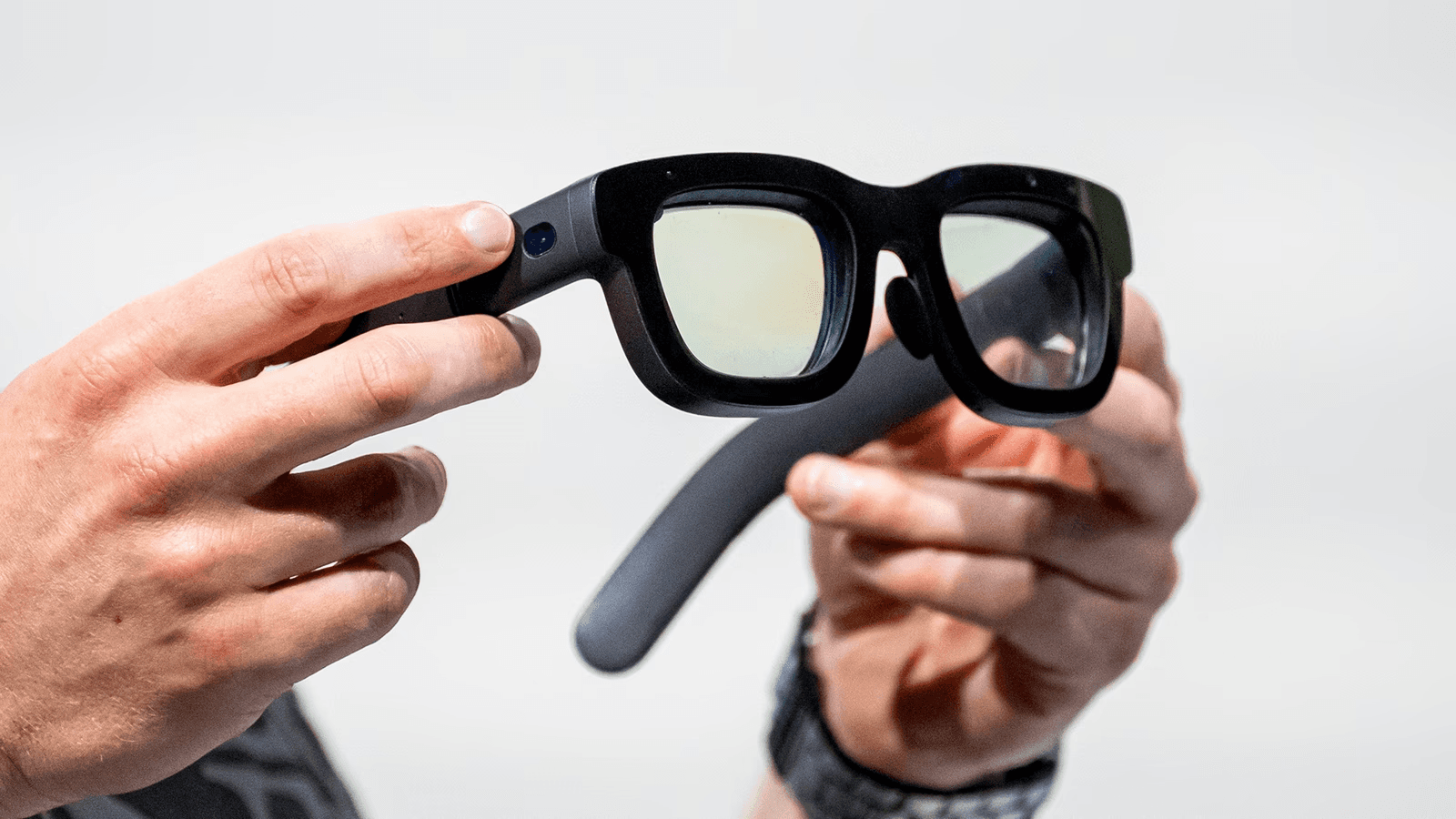
Industrial XR is moving beyond demos and pilots. Smart glasses and head-mounted displays are now being deployed inside hangars, factories, emergency scenes, and medical environments where live video is not optional. What determines success is not the headset alone, but the live video infrastructure underneath it.
At the center of these workflows is a need for reliable, high-fidelity, ultra-low-latency media that can run on low-powered devices, route intelligently to multiple endpoints, and integrate cleanly into enterprise systems. This is where a dedicated media layer becomes essential.
The Missing Layer in Industrial XR
Most smart glasses platforms focus on optics, form factor, and on-device compute. Very few solve the harder problem: how video, audio, and telemetry move off the device, through constrained networks, and into enterprise workflows in real time.
Industrial XR environments introduce unique constraints:
Limited battery and compute budgets on smart glasses
Bandwidth variability across Wi-Fi, Private 5G, and macro 5G
The need to view, route, record, analyze, and display the same stream simultaneously
Security and control requirements across regulated industries
A general-purpose video stack struggles under these conditions. Industrial XR requires a purpose-built live video infrastructure.
A Containerized Media Layer for Smart Glasses
ActionStreamer provides a containerized live video infrastructure designed specifically for low-powered, edge-based devices like smart glasses. Instead of coupling streaming logic tightly to hardware, media capabilities are abstracted into a portable, software-defined layer.
This containerized approach allows smart glasses manufacturers and enterprise teams to:
Embed live streaming without rewriting device firmware
Route video dynamically to browsers, dashboards, XR headsets, or video conferencing platforms
Scale across different smart glasses models and existing camera hardware
Maintain consistent performance regardless of device form factor
The result is a hardware-agnostic media layer that travels with the application, not the device.
High-Fidelity, Low-Latency Streaming on Low-Power Devices
Industrial XR workflows demand more than “good enough” video. Fine motor tasks, safety-critical decisions, and spatial awareness depend on clarity and timing.
ActionStreamer offers tools that enable:
High-fidelity video optimized for constrained edge devices
Ultra-low-latency transport for real-time decision making
Efficient encoding pipelines designed for smart glasses battery limits
Stereoscopic streaming, supporting depth-aware XR experiences
On-headset display, allowing the same live stream to be viewed locally while being routed remotely
This enables workflows where a technician, responder, or clinician sees exactly what remote teams see, without delay or degradation.
Routing Media Across XR, Enterprise, and Existing Systems
Live video in XR is rarely point-to-point. A single stream often needs to be routed to multiple destinations simultaneously:
Back to the wearer’s headset
To a remote expert on a desktop or tablet
Into an operations center dashboard
Through AI services for real-time analysis
Into secure archives for training or compliance
Because the media layer is decoupled from hardware, the same infrastructure supports advanced streaming applications across smart glasses and existing camera systems already deployed in the field.
Industrial XR Use Cases Across Sectors
Aerospace and MRO
Smart glasses paired with live video infrastructure support aircraft maintenance, inspection, and troubleshooting. Remote engineers can see first-person views in real time, while sessions are recorded and indexed for compliance and training.
Connected Worker Programs
Field technicians across utilities, energy, and manufacturing can stream live video from smart glasses to supervisors and remote experts, reducing truck rolls and improving first-time fix rates.
Public Safety and Emergency Response
First responders can transmit live video from smart glasses back to command centers, enabling better situational awareness, coordinated response, and post-incident review.
Medical and Clinical Environments
Smart glasses enable hands-free live video for training, tele-mentoring, and procedural documentation, with strict control over routing, recording, and access.
Custom Enterprise XR Applications
Developers building proprietary XR workflows can leverage a media layer that integrates directly into their applications without being locked to a single device ecosystem.
Enabling the Next Generation of Industrial XR
As smart glasses adoption accelerates, differentiation will come from software and infrastructure, not hardware alone. Companies building XR workflows need a media layer that is portable, scalable, and designed for real-world constraints.
By focusing on high-fidelity, low-latency streaming, containerized deployment, and developer-first integration, ActionStreamer enables smart glasses platforms and enterprise teams to unlock the full potential of industrial XR across aerospace, public safety, medical, and connected worker environments.
[ Blog ]