
Mar 31, 2026
ActionStreamer
Artemis II Is Testing the Future of Deep Space Video Transmission
The Apollo astronauts sent back grainy, black and white footage through a patchwork of radio links, analogue phone lines, and magnetic tapes that were eventually lost. Fifty years later, NASA's Artemis II crew has flown around the Moon and back, and along the way they tested a laser communications system that could fundamentally change how video gets transmitted from deep space. Here is what was actually happening on the communications side of this mission.
What Artemis II actually was
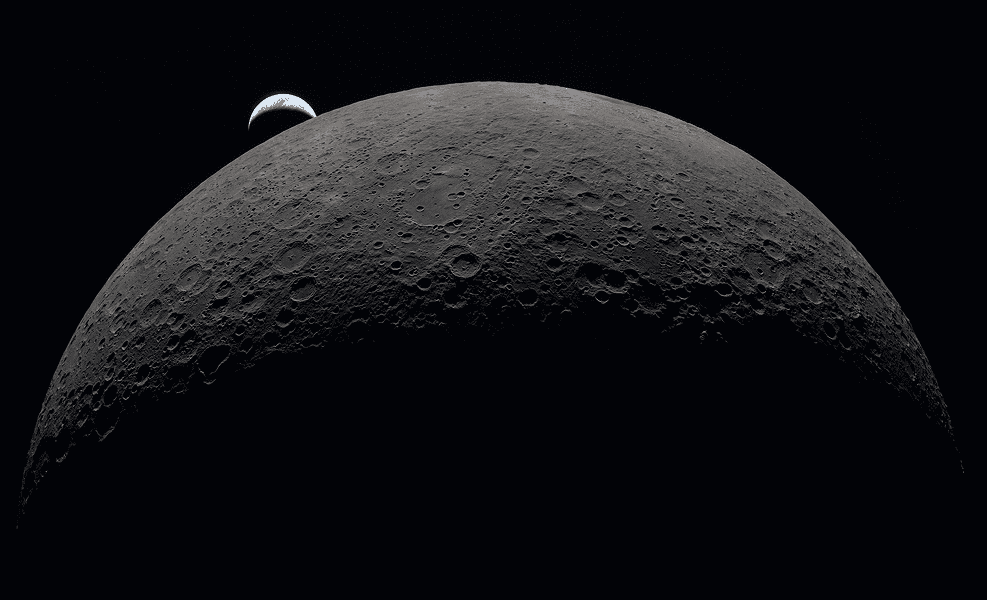
Artemis II was a crewed lunar flyby, not a landing. Four astronauts aboard the Orion spacecraft flew a free return trajectory around the Moon and are now heading back to Earth. No one set foot on the surface. The mission's primary purpose was to test Orion's systems with a live crew in a deep space environment, paving the way for future lunar landings.
Two communications systems flying in parallel
Throughout the ten day mission, Orion ran two communications systems simultaneously. The first is NASA's Deep Space Network, the agency's proven radio infrastructure that has underpinned every crewed spaceflight since the 1960s. The DSN handled mission critical data and served as the primary link throughout.
The second system is experimental: O2O, the Orion Artemis II Optical Communications System. This is a laser based terminal mounted on Orion's crew module adapter, officially classified as a Detailed Test Objective. NASA was evaluating it in a real crewed deep space environment for the first time, not relying on it for anything mission critical. Think of the DSN as the safety net, and O2O as the future being carefully tested against it.
What O2O actually is
The hardware at the heart of O2O is a component called MAScOT, the Modular, Agile, Scalable Optical Terminal, developed by MIT Lincoln Laboratory. It is roughly the size of a cat. Inside is a four inch telescope mounted on a two axis gimbal, with fixed backend optics and a modem that converts mission data into laser pulses and back again. The laser technology itself is borrowed from the fiber telecom industry, making it more mature than you might expect for a deep space first.
The system is capable of 260 megabits per second on the downlink and 20 megabits per second back up to Orion. On the ground, two laser receiving stations are positioned in Las Cruces, New Mexico and Table Mountain, California, both chosen for their reliably clear skies, a requirement that radio communications simply do not share.
What was actually being transmitted
Orion carried 32 cameras and imaging devices in total: fifteen fixed to the spacecraft and seventeen handheld cameras operated by the crew. NASA provided live coverage on NASA+ and YouTube throughout the mission, but the quality and availability of spacecraft camera views varied depending on bandwidth and conditions.
The 260 megabits per second figure is the peak capability, but that bandwidth was shared across everything: crew voice, telemetry, flight plans, scientific data, and video. Real time video over O2O in practice meant HD at best during normal operations. True 4K capture is possible, but that content is more likely returning to Earth on CompactFlash cards after splashdown than having been streamed live.
There were also planned blackout periods. When Orion passed behind the Moon, all communications went dark for roughly 40 minutes. Neither the DSN nor O2O could reach the spacecraft during that window.
Why this still matters for live video
O2O will not fly on Artemis III or Artemis IV. This mission was explicitly a proof of concept, and NASA is not rushing the transition away from the DSN. But if O2O performed as designed, it establishes the communications model for sustained human presence on the Moon and eventually for missions to Mars, where bandwidth constraints become far more severe than anything a lunar flyby presents.
For anyone working in live video, the trajectory is worth watching. The bottleneck in space transmission has never been the cameras. It has always been the pipe. Artemis II was the first serious test of what it looks like when that pipe gets a genuine upgrade, even if the full results will take time to evaluate.