Mar 31, 2026
ActionStreamer
The Case for Live Video in Oil & Gas Operations
When a piece of equipment fails at a refinery or offshore platform, the clock starts immediately. Production stops, safety risk increases, and the people who know how to fix it are rarely on site. Flying in a specialist takes days. Working from photos and verbal descriptions takes longer and gets things wrong.
This is the core operational problem live video solves in oil and gas. Not as a surveillance tool. Not as a compliance checkbox. As a direct line between the field and the expertise needed to make decisions in real time, with actual visual context.
The operational case is straightforward. The deployment challenge is not.
What the industry is actually trying to solve
Oil and gas operations are distributed by nature. Upstream assets including wells, platforms, and pipelines are often in remote locations with limited on-site staffing. Midstream and downstream facilities run continuously, and the maintenance and inspection workload that keeps them running requires specialized knowledge that does not always sit with the people closest to the equipment.
The traditional answer has been to mobilize experts. Fly them out, bring them on site, and let them assess the situation firsthand. That model is expensive, slow, and increasingly hard to justify as operators look to reduce costs without compromising safety or uptime.
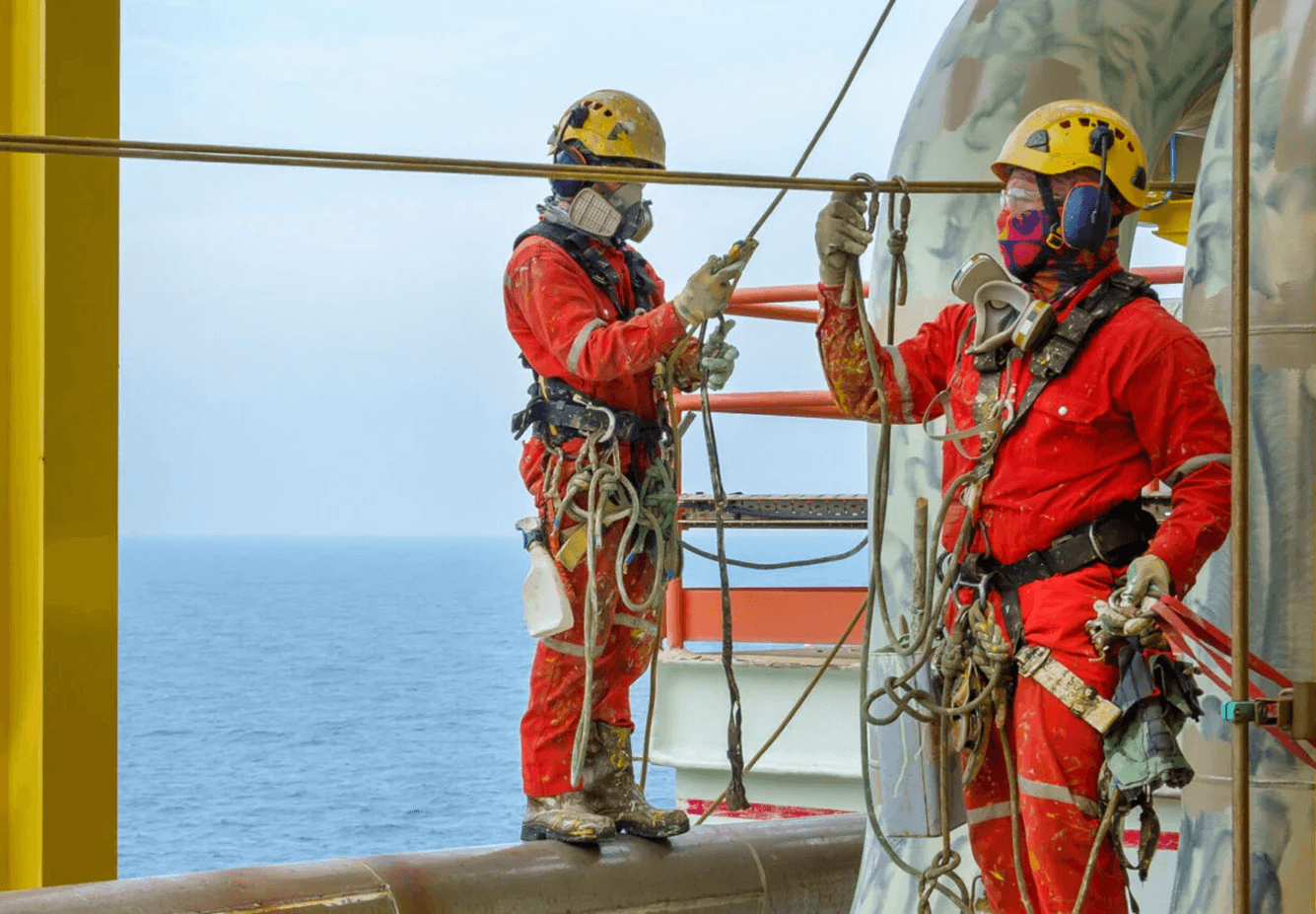
Live video is a direct lever on that problem. A field technician with a wearable camera can walk a remote expert through exactly what they are looking at. The expert sees what the technician sees, asks questions, and guides the work without getting on a plane. Inspections that previously required travel can be conducted remotely. Guided maintenance reduces errors and repeat visits. Incident commanders get real-time situational awareness instead of radio relay.
The value is not the video itself. It is the decision that gets made faster because someone with the right knowledge could actually see the problem.
Remote visual inspection, guided maintenance, and live permitting walkthroughs are active priorities across upstream and downstream operations. The technology has matured enough to deliver on the promise. The bottleneck is deployment.
Why most streaming hardware cannot be there
Oil and gas facilities are not office environments. Drilling floors, pump stations, tank farms, and processing areas are classified as hazardous locations where flammable gases, vapors, or dusts may be present. In these areas, every piece of electrical equipment is evaluated for ignition risk.
Intrinsic safety is the certification framework that governs this. Under standards like IEC 60079-11 and NEC Article 504, an intrinsically safe device is designed so that the electrical and thermal energy it can produce, even under fault conditions, is too low to ignite a flammable atmosphere. It is not a ruggedization rating. It is a fundamental design constraint validated by third-party certification bodies.
Most wearable cameras and streaming devices on the market do not have it. They are built for enterprise or public safety environments where ignition risk is not a factor. Bringing them into a classified hazardous area is not a policy gray zone. It is a safety violation.
This is the hardware barrier that stops most live streaming deployments in oil and gas before they start.
Hardware built for hazardous environments
ActionStreamer's IRIS wearable is designed specifically for operations where certification is non-negotiable. IRIS carries UL certification for intrinsically safe use, which means it has been independently tested and approved for deployment in classified hazardous locations. It is not a commercial camera adapted for the field. It is purpose-built for it.
The form factor matters too. IRIS is designed to be worn during active work, not held. Field technicians can keep their hands on the job while streaming continuous first-person video to remote experts, supervisors, or command centers. That is the workflow oil and gas operations actually need, not a device that requires someone to stop what they are doing to operate it.
UL certification is not a differentiator that applies everywhere. In hazardous classified environments, it is the threshold. Hardware that cannot clear it does not belong in the conversation.
Connectivity in the field is not a given
Even with certified hardware, live video in oil and gas faces a connectivity challenge that most streaming infrastructure was not built for.
Offshore platforms typically run private Wi-Fi networks with bandwidth shared across the entire facility. Bandwidth that seems adequate for general operations may not support reliable live video when other systems are active. Onshore well sites often have no fixed infrastructure at all, relying on cellular or satellite links that vary by location and conditions.
A streaming platform built for these environments has to be adaptive. Variable bitrate encoding that degrades gracefully when bandwidth drops. Store-and-forward capability that buffers and transmits when connectivity allows rather than dropping the session entirely. Protocol choices that prioritize reliability over raw throughput. SRT handles lossy networks significantly better than RTMP, with built-in error correction that maintains stream integrity under adverse conditions.
Private 5G is changing the picture at larger facilities. Some refineries and LNG terminals are deploying private networks that provide the consistent low-latency connectivity live video requires. But even with robust infrastructure, how the media is managed and routed matters. Connectivity is a prerequisite, not a complete solution.
Two-way communication with ActionSync Connect
Broadcasting video from the field is only part of the workflow. The field technician streaming from a hazardous area needs to hear from the remote expert in real time. Questions need answers. Instructions need to be heard clearly over ambient noise. Multiple stakeholders may need to view the same feed simultaneously.
ActionSync Connect is ActionStreamer's WebRTC-based video conferencing layer built specifically for frontline operations. It supports low-latency bidirectional communication between field workers and remote teams, with multi-participant viewing, so an engineer in one location and a safety officer in another can both observe the same live stream and contribute to the same conversation.
This matters in oil and gas because the guided inspection and remote assist workflow is not a one-way broadcast. It is a conversation with video. ActionSync Connect is built around that reality rather than treating it as an afterthought.
A platform built for integration
Most live streaming products are point solutions. A camera, an app, a viewer. That works for simple use cases. It does not work for complex operational environments where video needs to connect to existing systems and workflows.
O&G operations run on CMMS platforms, permitting systems, and incident management tools that have been in place for years. A live video capability that sits entirely outside those systems adds friction instead of removing it. Workers have to context-switch. Data lives in a silo. The full value of the video as a documented record, as an input to a work order, as evidence for a permit is never captured.
ActionStreamer's developer platform solves this differently. It exposes the media layer as infrastructure that development teams can build on, embedding live video directly into existing operational software rather than requiring operators to adopt a standalone application. The platform supports custom media routing, so video can be directed where it is needed within an existing architecture. It also supports AI inference and analytics pipelines, enabling organizations to run computer vision models or custom analytics against live video streams as part of a broader operational intelligence workflow.
Live video becomes a feature of the tools people already use, not a separate product they have to manage.
Where this market is heading
The pressures on oil and gas operators are not easing. Cost reduction targets, aging workforces, and safety compliance requirements are pushing the industry toward remote operations models that would have been difficult to execute even five years ago.
Live video is a foundational capability for that shift. Not a nice to have, but a prerequisite for remote inspection, guided maintenance, and real-time incident response to work at scale. The operational model depends on experts and the field sharing the same visual context regardless of where either party is located.
The hardware certification problem is solvable. The connectivity challenge has workable answers. The integration question favors platforms over point solutions. What remains is execution, deploying infrastructure that is built for the environment rather than adapted to it.
That is what ActionStreamer is built to do.