May 18, 2026
ActionStreamer
The Ultimate Guide to AI Layers for Live Video Streaming
Live video is the fastest-growing source of unstructured data on the planet. A single wearable camera streaming 1080p at 30fps produces roughly 4 megabits per second of pixels, and once you multiply that by frontline workers, drones, vehicle-mounted cameras, fixed installations, and remote sensors, you end up with a firehose that no human operator can possibly watch in real time.
That's where AI comes in. But AI doesn't just sit on top of a video stream as a single magic box. It's a stack of layers, each doing something specific, each operating under different latency and accuracy constraints, and each provided by a different set of vendors.
This guide breaks down those layers: what they do, who the major players are, and how they fit together. A quick note on where we stand. ActionStreamer isn't an AI company. We're the media layer. Our job is to move live video and sensor data reliably from the edge to wherever the analytics or AI pipeline lives, whether that's on-prem, in the cloud, or at the network edge. The AI vendors below are the ones we, and our customers, most often see plugged into the other end of that pipe.
How to Think About the AI Stack
Before naming names, it helps to understand that "AI on live video" usually means one or more of the following functions running in sequence or in parallel:
Ingest and pre-processing. Getting frames into a state the AI can consume (decode, resize, normalize, color-correct).
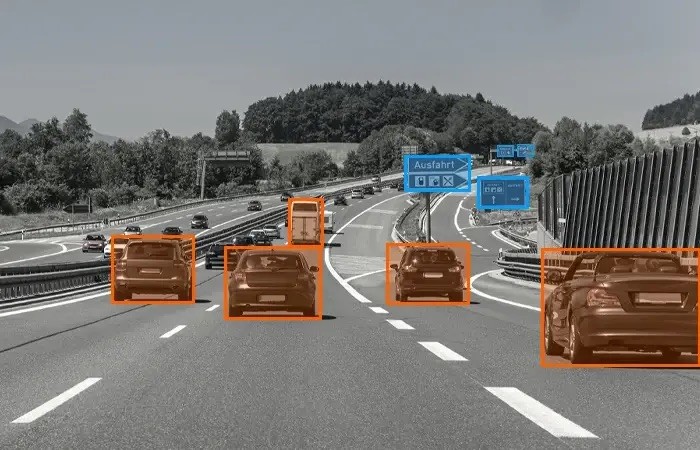
Perception. Detecting objects, faces, text, motion, scenes, and activities in individual frames.
Tracking and temporal reasoning. Connecting what's happening across frames over time (the same person walking through a building, a vehicle changing lanes).
Semantic understanding. Going beyond labels to meaning. Is this person in distress? Is that a safety violation? Is this scene brand-safe for an ad?
Speech, audio, and multimodal fusion. Transcribing what's said, detecting sounds, and combining audio cues with the visual signal.
Action and orchestration. Pushing detections into alerts, dashboards, search indexes, or downstream systems.
Every vendor in the space tackles some subset of these layers. Some are cloud-API building blocks. Some are end-to-end platforms. Some are edge runtimes designed to run AI locally on GPUs near the camera. The right choice depends on latency requirements, data residency, cost per stream-hour, and how much you want to build yourself.
The Cloud Hyperscalers
These are the three vendors most enterprises evaluate first, mostly because their billing already shows up on the corporate AWS, Google, or Microsoft invoice.
AWS Rekognition and Kinesis Video Streams
Amazon's offering is the most commonly cited reference architecture for cloud-based live video AI, and for good reason. It's been around the longest and has the deepest integration story.
The flow looks like this: Kinesis Video Streams ingests the live feed (from cameras, wearables, drones, or any device with the KVS producer SDK). Rekognition Video then attaches as a stream processor and runs detection on the frames as they arrive. The results flow into Kinesis Data Streams, where Lambda functions, SNS notifications, or downstream analytics pick them up.
Rekognition gives you face detection and search against a known collection, person tracking, content moderation, text detection (OCR), and a more recent Streaming Video Events API targeted at connected-home use cases (people, packages, pets) with motion-triggered analysis to control inference cost.
The big wins are tight AWS integration, the ability to specify clip lengths between 10 and 120 seconds to manage ML inferencing costs, and a mature ecosystem around it. The trade-off is that you're locked into the AWS data plane, and the per-minute pricing adds up fast on always-on streams.
Google Cloud Video Intelligence API
Google's equivalent is the Video Intelligence Streaming API, accessed through their open-source AIStreamer ingestion library. It natively supports the standard live streaming protocols (RTSP, RTMP, and HLS), which is a meaningful advantage if your sources don't already speak a cloud-vendor SDK.
Out of the box, the streaming API does live label detection, shot-change detection, explicit-content detection, and object tracking with bounding boxes. It also integrates with Vertex AI AutoML for custom models, which means you can train Google to recognize your specific objects or scenes.
Where Google tends to shine is broad entity recognition (their knowledge graph is enormous) and the ease of getting started if you already use GCP for other workloads.
Azure AI Video Indexer
Microsoft's offering has evolved significantly. The cloud version handles the full menu: faces, OCR, labels, scene detection, transcription, speaker identification, brand detection, sentiment, and topics. What's more interesting for live use cases is Azure AI Video Indexer enabled by Arc, which runs on Kubernetes at the edge and supports live streams directly.
Microsoft has also leaned into what they call agentic intelligence: task-focused AI agents that you can configure with natural-language descriptions of what to detect (a safety hazard, a customer-service issue, an operational anomaly). It's a fundamentally different paradigm from configuring rules and labels, and it's worth watching as the category matures.
Built-in live insights cover people and vehicle detection with bounding boxes, real-time counts, and per-camera tracking IDs. The custom-insight workflow lets you describe an object or situation in plain language and have the system detect it.
The Specialist Video-AI Platforms
The hyperscalers give you building blocks. A second category of vendors gives you full-pipeline platforms purpose-built for video understanding, often with semantic search and natural-language querying as their headline feature.
TwelveLabs
TwelveLabs has become one of the most cited names in modern video understanding. Their multimodal foundation models (Marengo for embeddings, Pegasus for generative understanding) are designed to perceive vision, audio, and text simultaneously and treat video as a first-class data type the same way LLMs treat text.
The platform lets you search video using natural language ("find every clip where a forklift enters the loading zone without a spotter") rather than relying on tags you remembered to add at ingest. For live use, partners like VideoDB have built infrastructure that pipes streams continuously into TwelveLabs models with event-based alerting on top.
TwelveLabs is API-first and developer-focused. If your application needs semantic search and summarization across large volumes of video, and needs that content to be searchable rather than just monitored, they're worth a serious look.
Memories.ai
A newer entrant building what they call a "visual memory" layer for video. The platform handles real-time threat detection, human re-identification, slip-and-fall detection, and natural-language video search. They've expanded beyond security into sports, customer service, and creative workflows, and their pitch is that video should be understood and remembered the way humans remember scenes, not stored as opaque bytes.
Mixpeek
A platform aimed at content intelligence and media production rather than security. It handles ingestion, indexing, and semantic search across video libraries and supports real-time RTSP/RTMP stream analysis with alerting. Mixpeek is one of the cleaner examples of the "full pipeline in one vendor" approach.
The Edge Stack: NVIDIA Metropolis and DeepStream
Everything above assumes you can afford to send your video to a cloud API and wait a few hundred milliseconds (at best) for results. For a lot of real applications such as autonomous vehicles, manufacturing safety, defense, or anywhere bandwidth is constrained or latency must stay under 100ms, that doesn't fly. You need to run inference at the edge, near the camera.
This is where NVIDIA dominates.
NVIDIA DeepStream SDK is a GPU-accelerated streaming analytics toolkit built on GStreamer. It bundles hardware-optimized plugins for video decode, multi-camera batching, TensorRT inference, object tracking, and cloud messaging into a single pipeline. A single Jetson device can process 30+ HD camera streams in real time, with end-to-end latency typically between 50 milliseconds and 2 seconds depending on the model.
NVIDIA Metropolis is the broader platform DeepStream lives inside. It includes the TAO Toolkit for model training, Triton Inference Server for serving, and a growing set of microservices for video storage, perception, analytics, and now agentic search through the VSS (Video Search and Summarization) Blueprint. The whole stack runs consistently on edge, on-prem, and in the cloud, which solves a real deployment problem for organizations that need the same application to work in all three environments.
For anyone building production-grade video AI where latency, multi-stream density, or air-gapped operation matter, NVIDIA's stack is almost unavoidable.
Speech, Audio, and Multimodal Layers
Video AI isn't just pixels. The audio track often carries the most actionable information: a verbal alert, a piece of dialogue, a machine noise that signals failure. A few names worth knowing:
AssemblyAI, Deepgram, and OpenAI Whisper (via API or self-hosted) handle real-time transcription with diarization (who said what).
Soniox and Speechmatics focus on streaming ASR with low latency and good performance on accented or noisy audio.
OpenAI, Anthropic, and Google Gemini increasingly offer multimodal models that can ingest video frames plus audio plus text context and reason across all three. The latencies are still high for true real-time use, but the capability ceiling keeps rising.
Often the right architecture is to use a specialist ASR provider for transcription, a vision provider for perception, and a generative multimodal model for reasoning over the combined signal, with your media transport layer feeding all of them in parallel.
How the Layers Compose
Here's how a typical pipeline looks for a customer doing real-time situational awareness on a fleet of wearable cameras:
The camera, worn by a frontline operator, captures video and sensor data and pushes it over a private 5G or LTE network to the media layer (this is the part we handle).
The media layer transports the stream losslessly to wherever the AI pipeline runs, which might be an on-prem NVIDIA box, an AWS region, or a GCP edge location.
Perception models (Rekognition, DeepStream, a custom TwelveLabs index) tag what's in each frame and track objects across frames.
An ASR layer transcribes anything spoken into the camera's mic.
An orchestration layer combines all of that into alerts, dashboards, or a searchable index, usually using the cloud vendor's pub/sub or a custom event bus.
A command center sees the live video with bounding boxes, captions, and metadata overlaid, and can search the archive by natural language after the fact.
Every layer in that pipeline is replaceable. That's the point. The reason we built ActionStreamer as a media layer, and not as another AI box, is that the AI landscape changes every six months. The model you pick today won't be the model you want in 2027. The transport, the device fleet, the network adaptation, the lossless capture-and-forward: those need to be stable infrastructure that doesn't change underneath you.
Choosing the Right AI Layer for Your Use Case
A quick decision framework:
You need broad object/face/text detection with minimal engineering effort. Start with a hyperscaler (Rekognition, Google Video Intelligence, or Azure Video Indexer). Whichever cloud you already live in is usually the right answer.
You need semantic search and natural-language querying over video. TwelveLabs or similar specialist platforms.
You need sub-second latency, dense multi-stream processing, or on-prem deployment. NVIDIA DeepStream on Jetson or data-center GPUs.
You need custom models trained on your specific objects or behaviors. AutoML (Google), Custom Labels (AWS), Custom Insights (Azure), or TAO Toolkit (NVIDIA), depending on where the rest of your stack lives.
You need a turnkey vertical solution (retail, security, sports). Look at the specialist players in that vertical; many of them are built on top of one of the platforms above.
The Layer We Don't Try to Replace
The thing we've learned working with customers across defense, energy, industrial, and public safety is that the AI choice is downstream of a more fundamental one: can you actually get the video to the AI in the first place, reliably, securely, and at the bitrate and latency your application needs?
That's the layer ActionStreamer focuses on. We move video and sensor data from cameras (including ones strapped to people moving through challenging environments) to whichever AI pipeline our customers have chosen. We do the network adaptation, the edge buffering, the protocol bridging (SDI, RTMP, SRT, WebRTC), and the lifecycle management of the devices themselves. The AI we leave to the specialists, and we make sure their pipelines get a clean stream to work with.
If you're designing a real-time video AI system, our recommendation is to think of the AI as a service you'll swap out a few times over the life of the deployment. Pick the AI layer that fits today's use case, but build on a media foundation that won't have to change every time the AI does.