
Apr 16, 2026
ActionStreamer
What Is a Connected Worker Platform?
The term gets used broadly, but for operations managers and procurement teams evaluating enterprise technology, a connected worker platform has a specific meaning and a specific set of capabilities that separates it from general workforce software.
At its core, a connected worker platform is a digital system that links frontline workers to the information, people, and infrastructure they need to do their jobs in real time, from the field. It combines wearable devices, IoT sensors, mobile applications, and data analytics into a unified system that gives workers access to critical information at the point of work, and gives supervisors visibility into what is happening on the ground as it happens.
The concept has gained significant traction across industrial sectors. The global connected worker market was valued at approximately $8 billion in 2024 and is projected to reach $20 billion or more by 2030, growing at a compound annual rate above 18%. The industries driving that growth are precisely the ones where workers operate in hazardous, remote, or complex environments: oil and gas, manufacturing, construction, utilities, aerospace and defense.
What a Connected Worker Platform Actually Does
The simplest way to understand it is to contrast it with what came before. Traditional field operations relied on paper-based work instructions, radio communications, in-person expert assistance, and manual incident reporting. Information moved slowly. Supervisors had limited real-time visibility. Workers in the field operated with incomplete context, and when something went wrong, response times reflected that gap.
A connected worker platform closes those gaps through several core capabilities.
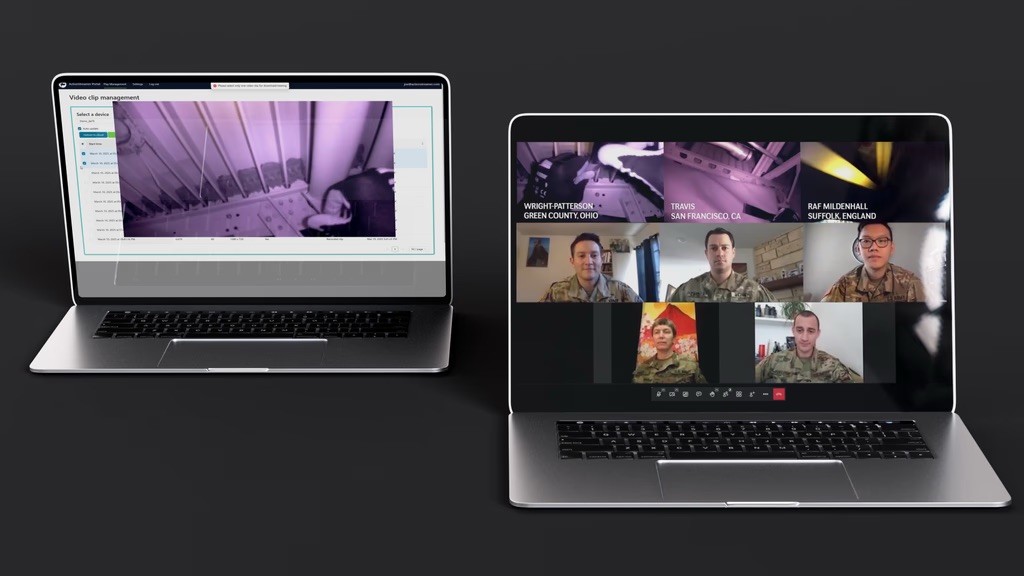
Real-time communication and remote collaboration allow workers in the field to connect instantly with supervisors, engineers, or remote experts. This is particularly valuable in confined space operations, hazardous environments, and maintenance scenarios where a technician needs guided assistance without waiting for a specialist to travel to site.
Device and environmental monitoring gives the platform continuous data feeds from wearable sensors and IoT devices attached to equipment and infrastructure. This includes worker biometrics such as heart rate and location, environmental conditions such as gas levels and temperature, and equipment status. Supervisors receive automated alerts when conditions move outside acceptable parameters.
Digital work instructions and task management replace paper-based processes with structured digital workflows that guide workers through procedures step by step, capturing data at each stage. This improves consistency, reduces human error, and creates a traceable record for compliance and quality assurance.
Live video and situational awareness are increasingly central to the connected worker architecture. The ability to stream live video from a wearable camera directly to a command center or remote expert fundamentally changes what is possible in field operations. A supervisor at headquarters can see exactly what a technician sees. A remote expert can guide a worker through a complex repair in real time. An incident can be documented as it occurs rather than reconstructed after the fact.
The Industries Where It Matters Most
Connected worker platforms are not a generic enterprise tool. They deliver the most value in environments where workers face physical risk, operate remotely or without direct supervision, or need expert knowledge they cannot carry with them.
In oil and gas, the platform enables real-time monitoring of workers in confined spaces and hazardous zones, remote expert assistance for complex maintenance procedures, and continuous environmental monitoring that triggers automated safety responses.
In manufacturing, it digitizes production floor operations, guides workers through quality-critical tasks, captures data for predictive maintenance, and reduces unplanned downtime by surfacing equipment anomalies before they become failures.
In construction and utilities, it provides real-time location tracking, safety compliance monitoring, and remote coordination across distributed work sites where centralizing expertise is not practical.
In aerospace and defense, the demands are even more specific. Workers and operators in these environments require not just information access, but live situational awareness, secure communications, and the ability to share real-time video of what is happening in the field with command elements that may be geographically distant. The connected worker in a defense context is not just safer and better informed. They are part of a networked operational picture.
What Separates a Real Platform from Point Solutions
Procurement teams evaluating this space often encounter a range of products that claim to be connected worker platforms but are in reality point solutions addressing one part of the problem: a safety monitoring app, a digital checklist tool, or a communications system. The distinction matters at procurement time because integrating multiple point solutions creates exactly the information silos that connected worker platforms are designed to eliminate.
A genuine connected worker platform provides a unified data layer. Information from wearables, cameras, sensors, and communications flows into a single system that can be monitored, analyzed, and acted upon from one interface. It connects the worker not just to a supervisor, but to the broader operational system including maintenance management, safety compliance, asset tracking, and command oversight.
The other dimension that separates serious platforms from lightweight solutions is the hardware layer. The wearable devices and cameras that workers carry are not peripheral to the platform. They are the platform's interface with the physical world. Device management, connectivity in low-bandwidth or offline environments, battery life, ruggedness, and the ability to mount and operate devices hands-free are operational requirements that software-only thinking tends to underestimate.
Where the Market Is Headed
Several converging trends are shaping what connected worker platforms will look like over the next few years. 5G private network deployments are dramatically increasing the bandwidth and reliability available to field operations, making continuous high-definition video streaming from wearable cameras a practical reality in environments where it was previously constrained by connectivity. Edge computing reduces dependency on cloud connectivity by processing data locally on the device or at a nearby node, which is critical for operations in remote or underground environments.
AI integration is moving from a marketing claim to a practical capability in the leading platforms. Predictive maintenance models that surface equipment anomalies before failure, computer vision that flags safety hazards from live video feeds, and automated workflow routing based on real-time conditions are all in production deployment in the most mature implementations.
The hardware segment currently accounts for roughly half of the connected worker market by revenue, reflecting the fundamental importance of the device layer. Wearables, smart cameras, rugged handhelds, and IoT sensors represent significant capital investment and require enterprise-grade management at scale.
ActionStreamer in the Connected Worker Ecosystem
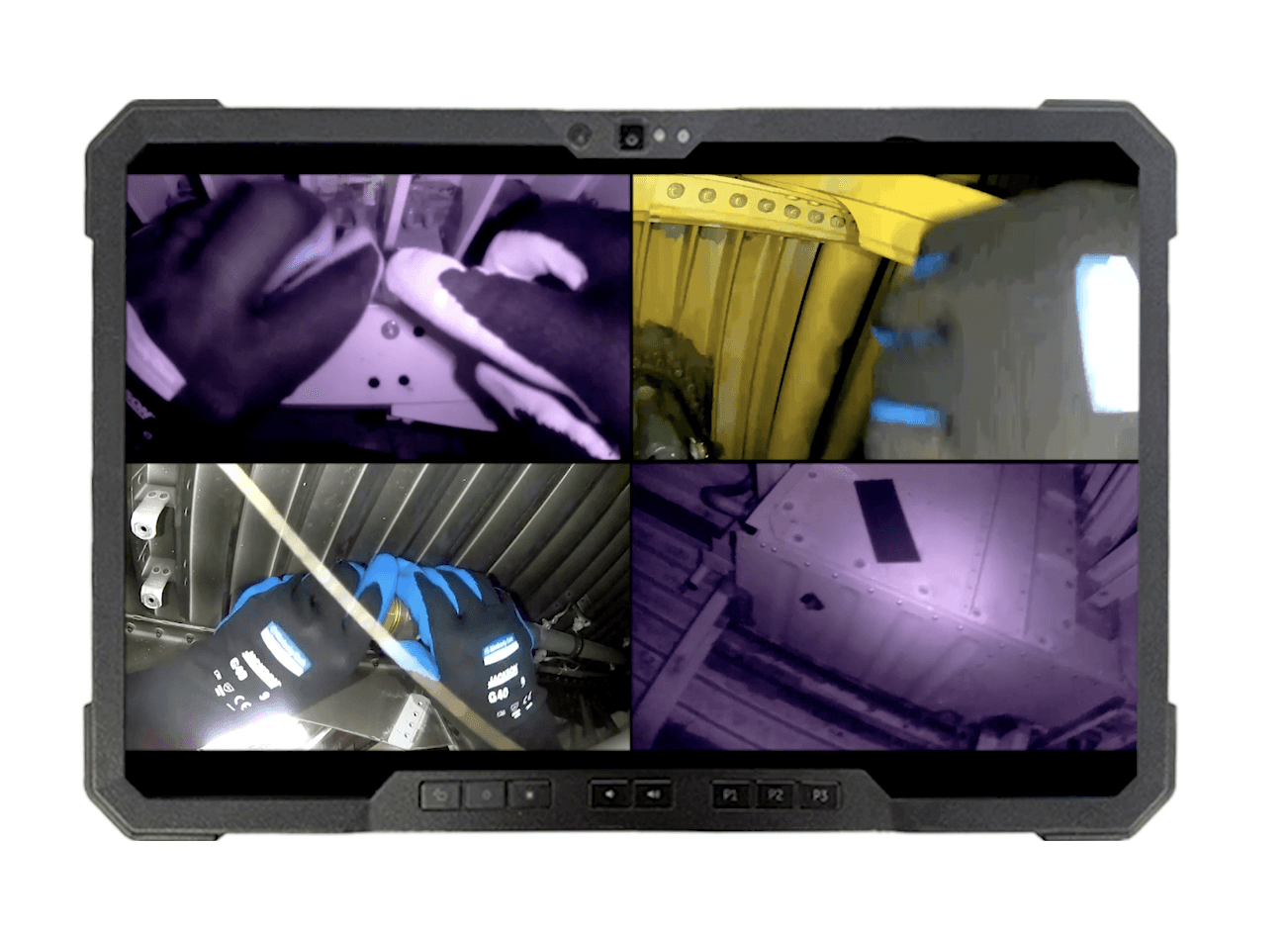
ActionStreamer operates squarely within the connected worker space, with a specific focus on the live video, wearable hardware, and device management layer that is increasingly central to how organizations deploy connected worker capabilities in the field.
The hardware layer starts with ActionStreamer's purpose-built wearable cameras, designed to integrate directly into existing PPE and body-worn systems for first-person, point-of-view video capture. These are not off-the-shelf action cameras adapted for industrial use. They are engineered for the connectivity requirements, form factors, and operational conditions of frontline environments, running on 5G, 802.11, and wired connections depending on the deployment.
On the software side, ActionSync is the platform that ties the hardware layer to the rest of the connected worker system. It provides real-time video and audio streaming, cloud-based device management, event-driven workflow configuration, offline recording with automatic sync when connectivity returns, and an AI layer for automated object detection, tagging, and searchable clip metadata.
Within ActionSync, ActionSync Connect is the remote assist and video conferencing capability built specifically for frontline operations. Where consumer video conferencing tools assume a stable connection and a stationary camera, ActionSync Connect is designed for body-worn devices moving through complex environments. It enables a technician in the field to share a live first-person feed with a remote subject matter expert who can guide the work in real time, with the sub-second latency that makes that guidance operationally useful rather than decorative. For maintenance, repair, confined space operations, and any scenario where expert knowledge needs to reach someone who cannot wait for that expert to physically arrive, ActionSync Connect closes the gap that most connected worker strategies leave open.
For operations managers and systems integrators evaluating connected worker infrastructure, the combination of purpose-built wearable hardware, a managed streaming platform, and a field-ready remote assist capability in a single integrated system is what differentiates a connected worker deployment that delivers operational value from one that adds complexity without changing outcomes.
[ Blog ]