

Jun 1, 2026
ActionStreamer
AI Object Detection with Live Video Streaming
Artificial intelligence can now identify objects in video with remarkable accuracy but getting that video to the AI model in the first place is a problem most people overlook. The models get all the press. The infrastructure that feeds them rarely does.
That gap is exactly where ActionStreamer operates.
ActionStreamer is the media transport layer that sits between your cameras and everything that needs to receive that video, including AI inference engines, video conferencing platforms, cloud storage, and more. If AI object detection is the brain, ActionStreamer is the nervous system that carries the signal.
What Is Real-Time AI Object Detection?
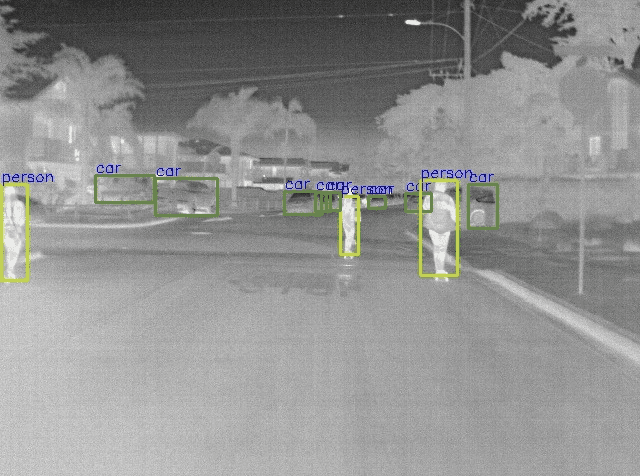
Real-time AI object detection is the process of analyzing a live video stream, frame by frame, to identify and locate objects within the scene as they appear. Unlike static image analysis, real-time detection must work fast enough to be actionable. This typically means processing within milliseconds.
Modern object detection models such as YOLO (You Only Look Once), SSD (Single Shot MultiBox Detector), and transformer-based architectures, can identify dozens of object classes simultaneously: people, vehicles, tools, equipment, animals, and more. They draw bounding boxes around detected objects, assign confidence scores, and classify what they see. All of this happens in real time.
The applications are sweeping:
Field service and remote assistance: technicians in the field can have AI identify the components they're looking at and surface relevant instructions automatically.
Public safety and surveillance: detecting unauthorized individuals, vehicles, or objects in restricted areas.
Industrial inspection: identifying defective parts on a manufacturing line without stopping production.
Sports and media: tracking players, balls, and movement for broadcast analytics.
Healthcare: detecting anomalies in medical imaging or monitoring patient environments.
In every one of these use cases, the quality and reliability of the video feed is just as important as the sophistication of the model itself. Latency, dropped frames, compression artifacts, and delivery failures all degrade detection accuracy. This is where the transport layer becomes critical.
The Problem: Getting Video to AI Is Not Trivial
Most organizations focus their AI investment on the model: training it, fine-tuning it, deploying it. What they underestimate is the complexity of getting a clean, low-latency video stream to that model consistently and at scale.
Consider a real-world deployment: a field technician wearing a body camera needs to send video to an AI inference engine for object detection, to a remote expert on a video call, and to a cloud recorder for compliance purposes, all at the same time, all from a mobile network connection.
That's not one stream. That's many streams, to many destinations, with different format and latency requirements, potentially across different network conditions, delivered reliably and simultaneously.
Without the right infrastructure, teams end up with fragile, custom-built pipelines that break under real-world conditions.
ActionStreamer: The Media Layer for AI-Powered Video Workflows
ActionStreamer is purpose-built to solve the video transport problem. It functions as the core media layer between capture devices and the endpoints that consume video , including AI inference engines.
ActionStreamer does not build AI models. Its role is to ensure those models receive exactly the video they need, when they need it, without disruption.
Multiplexing: One Stream, Many Destinations
The most powerful capability ActionStreamer brings to AI object detection workflows is video multiplexing, which is the ability to send a single video feed to multiple endpoints simultaneously.
In practice, this means a single camera source can simultaneously deliver video to:
A video conferencing platform for live remote assistance (so a remote expert can see what the person in the field sees)
An AI inference engine performing real-time object detection
A cloud recording service for storage, compliance, or post-event review
Additional processing pipelines for analytics, transcription, or other downstream tasks
All of this happens in parallel, from a single stream. The technician does not need to choose between getting help from a remote expert and getting assistance from an AI model. Both happen simultaneously, over the same feed, in real time.
This architectural approach eliminates the need to build and maintain separate pipelines for each destination. ActionStreamer handles the fan-out, manages the delivery, and maintains stream integrity across all endpoints.
Purpose-Built for Real-Time Performance
Real-time object detection is latency-sensitive. A stream that buffers for three seconds before reaching the AI model is not a real-time stream. It's a slightly delayed one, and in many operational contexts that delay is unacceptable.
ActionStreamer is designed around low-latency transport, ensuring that video arrives at the inference engine as close to the moment of capture as possible. This keeps the detection loop tight and the outputs actionable.
Flexibility Across Networks and Environments
Field deployments rarely happen on perfect networks. ActionStreamer is designed to operate across variable network conditions, including cellular, Wi-Fi, and mixed environments, while maintaining stream quality and delivery reliability even as conditions fluctuate. This is essential for real-world AI deployments where the camera isn't sitting next to a fiber connection in a data center.
A Practical Example: Remote Assist + AI Detection + Recording
To make this concrete, here is how ActionStreamer fits into a real-world object detection workflow:
Scenario: A utility company deploys field technicians with body cameras. The company wants to use AI to automatically detect which equipment the technician is interacting with and surface relevant maintenance procedures. At the same time, a remote supervisor may need to jump into a live video call to assist. All sessions must be recorded for compliance.
With ActionStreamer as the media layer:
The body camera sends a live video feed into ActionStreamer.
ActionStreamer multiplexes the stream to three simultaneous destinations: the company's AI object detection model, a video conferencing endpoint for the remote supervisor, and a cloud storage service.
The AI model receives a clean, low-latency feed and begins identifying equipment components in frame, delivering bounding boxes and classification labels in real time.
The remote supervisor sees the same video on their screen, live, and can speak directly with the technician.
The full session is recorded and timestamped for compliance review.
None of these outputs interfere with each other. The same stream serves all three purposes simultaneously, with no additional infrastructure required from the user.
Why the Transport Layer Matters as Much as the Model
It's easy to assume that AI object detection is primarily a modeling problem. Train a better model, get better results. That is partly true, but only if the model is receiving good video.
A high-quality detection model fed a degraded, high-latency, or intermittent video stream will underperform. Dropped frames mean missed detections. Compression artifacts introduce noise that confuses object classifiers. High latency means detections arrive after the moment has passed.
ActionStreamer ensures the model receives what it needs: a consistent, low-latency, high-integrity video feed. It turns the transport layer from a liability into a reliable foundation.
For organizations building real-time AI video applications, the question is not just "which model should we use?" It is also "how do we get clean video to that model, at scale, in real time, while also serving our other operational needs?"
ActionStreamer answers the second question.
Conclusion
Real-time AI object detection is one of the most powerful tools available for field operations, industrial automation, public safety, and a wide range of other applications. But the value of that technology is only realized when the video pipeline supporting it is robust, low-latency, and flexible enough to serve multiple use cases simultaneously.
ActionStreamer provides the media transport layer that makes this possible. By handling video multiplexing, low-latency delivery, and multi-endpoint distribution, ActionStreamer allows organizations to send video to AI inference engines, video conferencing platforms, and recording services all at once, delivered from a single stream.
The models detect the objects. ActionStreamer makes sure they can see them.
[ Blog ]


